Showing posts with label Internet. Show all posts

Monday, November 14, 2011

Amazon Ships Kindle Fire A Day Early

Amazon.com Inc. started shipping its Kindle Fire tablet Monday, kicking off its expansion into the tablet market a day earlier than it had said it would.
Amazon's $199 tablet is the latest in a series of devices to challenge Apple Inc.'s iPad. The online retailer is betting its lower price and vast library of digital content will make its offering more compelling than rival gadgets from Hewlett-Packard Co., Research In Motion Ltd. and others.
"Kindle Fire quickly became the bestselling item across all of Amazon.com, and based on customer response we're building millions more than we'd planned," Amazon Vice President David Limp said in a statement.
The company didn't give details on why it changed the shipping date. A spokesman couldn't immediately be reached for comment. "Like any other business, you want to underpromise and overdeliver--I think that's essentially where Amazon is right now," Caris & Co. analyst Scott Tilghman said. "Given that their (business) model is to ship products to customers, the sooner they can get the product in customers' hands, the better."
Amazon's library of digital content, which Fire users can access, is seen as an advantage for the product. Customers get a month free of a service called Amazon Prime, which offers streaming movies and TV shows, and free e-books for limited periods on Kindle devices as well as unlimited two-day shipping for physical goods bought on Amazon.com. The service normally costs $79.
Amazon also said its new Kindle Touch and Kindle Touch 3G e-readers will begin shipping on Tuesday, six days ahead of a previously anticipated Nov. 21 launch.
Amazon's Kindle Touch is priced at $99 and the Kindle Touch 3G at $149. Apple's iPad starts at $499.

Apple fixes iPhone battery problem with software update

Apple issued a software update to its latest mobile operating system on Thursday in a move to fix widespread problems with the battery life of the iPhone 4S.
The software update, iOS 5.0.1 also adds multi-tasking gestures to early versions of the iPad and closes a security loophole that could have duped users into loading malware onto their iPhones and iPads through Apple’s App Store.
Complaints about the disappointing battery life began popping up immediately after the release of the iPhone 4S last month, which Apple acknowledged in a statement last week.
“A small number of customers have reported lower than expected battery life on iOS 5 devices,” Apple wrote. “We have found a few bugs that are affecting battery life, and we will release a software update to address those in a few weeks.” The software update was the first one issued by Apple that was pushed to users over the cellular networks, rather than requiring them to sync up their devices with their laptops.

Saturday, October 30, 2010

Google bans phone application used in spying

A controversial mobile phone application, which helps a cell phone user read the text messages of others secretly, has been removed from sale by internet search engine Google. Google said the application, called SMS Secret Replicator, violated its terms, The Independent reported on Friday.

Once installed on a mobile phone, the Android phone application automatically creates carbon copies of incoming text messages and forwards them to a selected number - prompting fears it could be used by jealous lovers and even work colleagues to snoop on private messages.

Jealous lovers are encouraged to secretly set up a password-protected application on their partners' phones and set it to forward text messages to their own, the paper said. 

"The app is unique because there is no visible icon or shortcut to access it, so once it's installed, it will continue to monitor without revealing itself," the developer DLP Mobile was quoted as saying.

Its chief executive, Zak Tanjeloff, said the application was "certainly controversial but can be helpful to people in relationships where this type of monitoring can be useful".

The app's creators have given it the slogan "nothing is secret". Google confirmed it had suspended the application.

Thursday, July 29, 2010

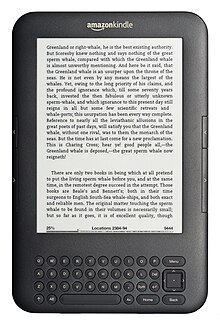
Amazon Launches $139 Wi-Fi Kindle

Amazon has launched a $139 Wi-Fi-only Kindle, hoping to stay ahead of competitors by luring customers with low-priced e-readers that the online retail is betting will drive digital book sales.

Amazon on Thursday also introduced the third generation of the original Kindle, which has Wi-Fi and 3G wireless technologies. The latter makes it possible to buy digital books from Amazon and download them in less than a minute. Amazon kept the price for the device at $189.

Both Kindles are about $10 less than comparable e-readers from rivals Barnes & Noble, Borders and about $30 less than Sony's device, excluding the $25 e-book gift card Sony gives with each purchase.

Besides lower prices, the latest Kindles have several improvements over previous generations. While the size of the screen remains six inches diagonally, the display is based on manufacturer E Ink's latest technology, which offers a contrast ratio about 50% greater. While the screen only displays black-and-white, its high resolution makes it possible to read text even in direct sunlight, an advantage over the LCD displays used in Apple's iPad and smartphones.

In addition, Amazon has made the Kindle 21% smaller through a sleeker design and has reduced the weight by 15% to 8.7 ounces. The latest models have a battery life of a month and twice the storage, which is enough to carry up to 3,500 digital books.

While Amazon has prepped the latest Kindles as stiffer competitors, the retailer won't be able to start shipping the e-readers until Aug. 27. Amazon suspended shipments on Wednesday, but is taking pre-orders.

Nevertheless, Amazon is making the Kindle available in time for the back-to-school shopping season. The retailer is also pressuring competitors to lower prices, as the industry moves closer to offering devices possible as low as under $100, which analysts say would be low enough to be a compulsive buy for consumers.

Amazon's latest releases reflect an industry shift toward making money on the sales of e-books instead of the e-readers, since the lower prices are meant to get the devices in the hands of potential book buyers.

This strategy is apparently working for Amazon. the company this month announced that unit sales of e-books surpassed that of hardcover books. On Wednesday, Amazon said Swedish author Stieg Larsson has become the first writer to sell more than 1 million digital books on Amazon. Larsson is the author of the bestselling "Millennium Trilogy."

The growth rate of e-books sales for Amazon has been impressive, given that digital books overtook hardcover books in less than three years. Amazon has been selling hardcover books for 15 years.

However, competition could get tougher, not just from other e-readers, but also from the emerging category of tablet-style computers, such as the iPad. While the Apple computer starts at more than $300 more than the cheapest Kindle, it does considerably more besides acting as an e-reader. The device also surfs the Web, accesses e-mail and plays video, music and games.

Wednesday, July 28, 2010

Paypal disables e-withdrawal functionality in India

Ebay's payment company Paypal has given second blow to the Indian users with the announcement of removing the electronic withdrawal functionality for Indian users from August 1, 2010.

Dickson Seow, Corporate Communications team, Paypal communicated through its blog that the change has been introduced in accordance with regulatory instructions.

“At present, you can request for either an electronic or cheque withdrawal of funds from your PayPal account. From July 29, 2010 onwards, you will only be able to request for a cheque withdrawal of funds from your PayPal account,” it said.

Paypal stated that while the company is working towards restoring the facility it has the alternative options in place for future payments which is the cheque payment process.

The company is ready to refund the $5 USD cheque withdrawal fee to for cheque withdrawals made from July 29, 2010 onwards, it said.

The first shock from Paypal came earlier this year, in February, when it announced the suspension transactions to and from India. However, that was brought back into working within a few weeks.

Yahoo Japan to switch to Google's search engine

Yahoo Japan, Japan's largest Internet portal operator, will adopt Google's search engine, refusing to follow Yahoo Inc in choosing Microsoft as a partner.

Yahoo Japan, which currently uses Yahoo Inc's search technology, and Google together would control almost all of the search market in the word's second-biggest economy.

The deal stands in stark contrast to the decision by Yahoo Inc, which owns roughly one-third of Yahoo Japan, to integrate its search technology with Microsoft after the U.S. government blocked a tie-up with Google.

Yahoo Japan, which hopes the deal will strengthen its No. 1 position in the domestic market, will also adopt Google's search-linked advertisement delivery system and feed its data to Google sites.

The deal was seen by some as underscoring Microsoft's weaker position in search. Microsoft said the deal would hand the whole search market to Google and stifle competition.

"If this Yahoo Japan and Google partnership works well, other search engine and portal site players all over the world may start adopting Google's technology," said Mitsushige Akino, chief fund manger at Ichiyoshi Investment Management.

At a news conference, Yahoo Japan President Masahiro Inoue said the Japanese company concluded after a thorough investigation that Microsoft's search technology was not strong enough for its needs, citing Japanese language search capabilities as one example.

Yahoo Japan shares gained 1.2 percent on reports of an imminent deal, while the broader market was flat. The announcement came after the close of trading hours.

Yahoo Japan said in a statement Yahoo Inc will remain a strategic partner for the Japanese portal site and the U.S. company will maintain its stake. Yahoo Japan will still use the Yahoo brand.

The Japanese company also said it has confirmed with the Japanese government that the partnership with Google will not violate antitrust regulations.

Yahoo Inc, Yahoo Japan's second-biggest shareholder after Softbank Corp, signed a 10-year deal with Microsoft last year to save hundreds of millions of dollars a year in expenses by shifting Web indexing chores to Microsoft while Yahoo focuses on improving searching.

Yahoo Inc executives have said the company expects to complete the search technology integration in all 59 countries in which it operates by the second quarter of 2012.

Microsoft railed against the Yahoo-Google tie-up in Japan on Tuesday, but stopped short of saying it would challenge it legally.

"This agreement is even more anti-competitive than Google's deal with Yahoo in the United States and Canada that the Department of Justice found to be illegal," said Microsoft's general counsel in a statement.

"(That) deal would have locked up 90 percent of paid search advertising. This deal gives Google virtually 100 percent of all searches in Japan, both paid and unpaid. It means there will be no search competition in Japan and that Google will end up controlling all personal search information for all Japanese consumers and businesses."
Source: Reuters

Sunday, July 25, 2010

Four Ways IPv6 Will Save the Internet

The Internet will run out of Internet addresses in about 1 year's time, we were told today by John Curran, president and CEO of the American Registry for Internet Numbers (ARIN). The same thing was also stated recently by Vint Cerf, Google's Chief Internet Evangelist.

The main reason for the concern? There's an explosion of data about to happen to the Web - thanks largely to sensor data, smart grids, RFID and other Internet of Things data. Other reasons include the increase in mobile devices connecting to the Internet and the annual growth in user-generated content on the Web.


Why a New Internet Protocol is Needed
Currently the Web largely uses IPv4, Internet Protocol version 4. Each IPv4 address is limited to a 32-bit number, which means there are a maximum of just over 4 billion unique addresses. IPv6 is the next generation Internet Protocol and uses a 128-bit address, so it supports a vastly larger number of unique addresses. Enough, in fact, to give every person on the planet over 4 billion addresses!

John Curran from ARIN, the non-profit responsible for managing the distribution of Internet addresses in the North American region, told ReadWriteWeb that of the approximately 4 billion IPv4 addresses available, all but 6% have already been allocated. Curran expects the final 6% to be allocated over the coming year.

This is largely an issue that ISP (Internet Service Providers) and telecoms carriers need to deal with. However content service providers, including large-scale Internet companies like Google and Facebook, also need to ensure that the transition from IPv4 to IPv6 takes place. Curran explained that a content company like Google (for example its YouTube operation) will need to work with its ISP to transport the content via IPv6 as well as IPv4.

This transition is happening "slowly," says Curran. But he warns that "deployment is where we're behind."

Google, Facebook & Others Making Good Progress
John Curran told us that large carriers like Verizon and Comcast have announced trial IPv6 activity. Curran also noted that new Internet of Things initiatives that use sensor networks, power grids, RFID and similar technologies, are being directed to use IPv6 and not IPv4.

There is also solid support from the big Internet companies. Curran said that Google has already put the majority of its services onto IPv6. Declaring its support for IPv6 on a special webpage, Google states that "IPv6 is essential to the continued health and openness of the Internet [and] will enable innovation and allow the Internet's continued growth."

In June, Google held a Google IPv6 Implementors Conference. At that event, Facebook announced that it had begun to use IPv6.

In his opening remarks to the conference, Google's Chief Internet Evangelist Vint Cerf urges ISPs to move to IPv6, so that a "black market" for Internet addresses won't occur.

The bottom line is that IPv6 is a much larger platform for the coming Internet of Things. So one way or another, the move will have to be made.

Wednesday, July 21, 2010

Facebook hits 500m user milestone

Social network giant Facebook has registered its 500 millionth member, the firm has announced.

The site, which launched in 2004, has gained around 100 million new users in the last six months.

Facebook said the number was "an important milestone" and added that it was "humbled and inspired" by the stories of its users, which it is asking people to share on the site.

Stuart Miles of tech blog Pocket Lint said its success was down to "word of mouth".

"There are so many people online and so many people wanting to share with each other's friends - it's like a snowball," he told.

"It started off small, rolled and rolled, then all of a sudden not just your immediate circle of friends are on it but loads of people are, and they're all evangelising about why you should be on it too.

"The next milestone, which will probably be 750m, won't take as long - the more you have the more it spreads, like that snowball."

Mr Zuckerberg recently said that the site was "almost guaranteed" to reach one billion users.

However, the site has also had its share of problems. It recently came under fire for making repeated changes to its privacy settings and thousands of people threatened to boycott it in May 2010. Despite the controversy, most people were not put off.

As Facebook has grown, many of its competitors have shrunk or disappeared. MySpace, owned by News Corp, was once the poster child of social networking.

However, Facebook raced past it in 2008. MySpace currently has around 65 million unique users.

Another competitor, Bebo, has also faced difficulty. In June this year, its owners AOL announced sold the site just two years after it bought it for $850m (£417m).

The company said it was unable to provide the "significant investment" it needed to compete with its social networking rivals.

One site that appears to be growing alongside Facebook is Twitter.

Measurements of Twitter traffic are notoriously difficult as many users do not interact with the service through the website. Instead, they use desktop software and mobile phones. However, it is estimated to be approaching 200m users.